A 3-layer lighting plan: ambient, task, accent
12 May 2026 · 7 min
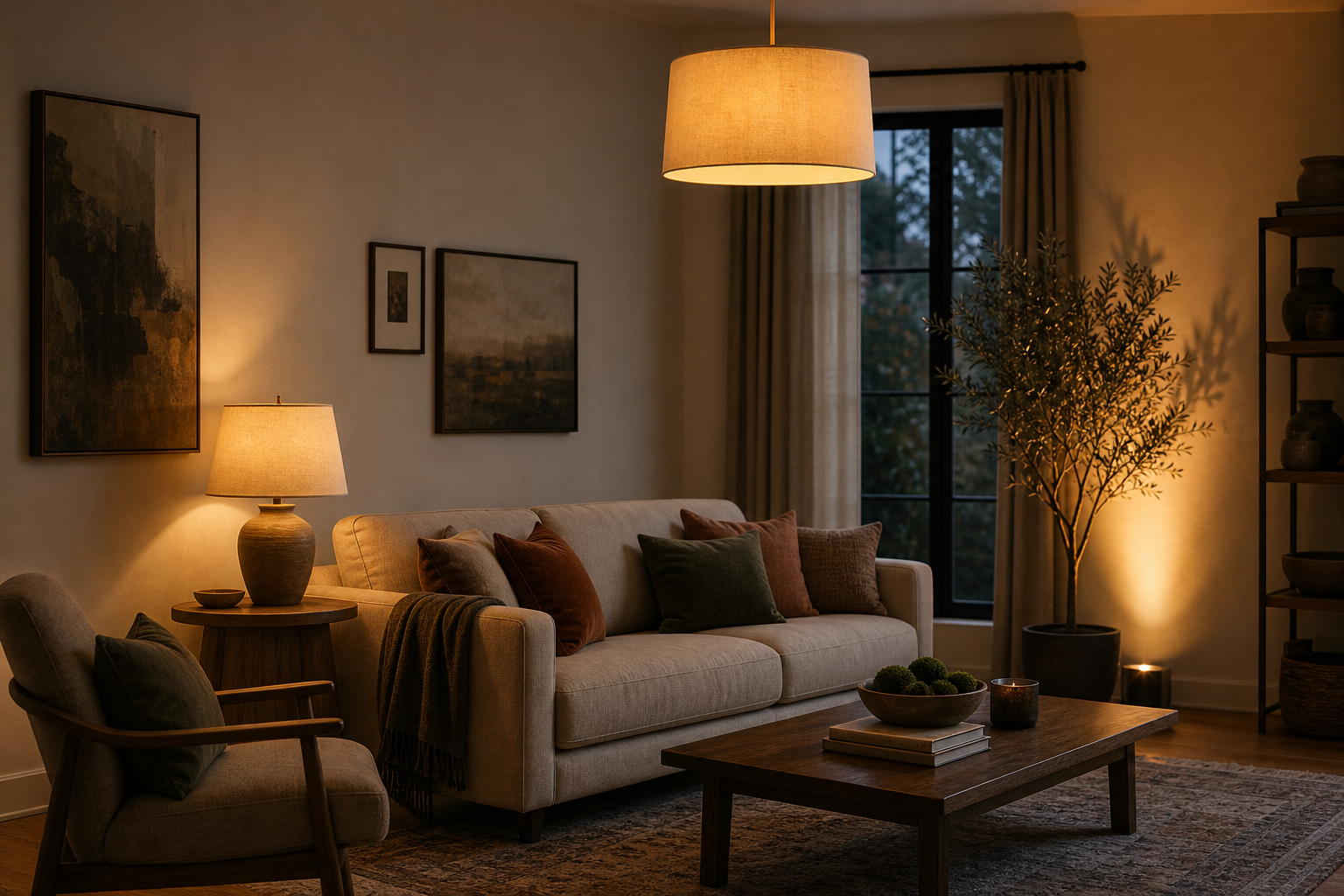
Lighting designers' method applied to a real living room: where to place the pendant, what lumens to pick for reading lamps, and why one low-set second source changes everything after 7 pm.
Most living rooms have a single ceiling light doing 100% of the work. It looks fine at midday and harsh at 8 pm. A 3-layer lighting plan fixes this in an afternoon and costs less than replacing a sofa cushion set.
Layer 1 — Ambient: the volume of the room
Ambient light fills the entire room and sets the overall brightness. A central pendant or a pair of wall sconces with a warm 2700K bulb does the job. The key number to remember is roughly 100–150 lumens per m² for a relaxed living room, not the maximum the fixture supports.
Layer 2 — Task: where you actually do things
Reading nook, dining table, console: each functional zone gets its own focused light. A floor lamp aimed at the book is more comfortable than a brighter ceiling. Reading lamps work best between 400 and 600 lumens with a shade that prevents direct glare.
Layer 3 — Accent: the after-7 pm trick
Place one low-set source — a table lamp on a sideboard, an uplight behind a plant — at around 40 cm from the floor. The room becomes visually layered the moment ceiling lights go off and only ambient + accent stay on. This is the single biggest move for evening atmosphere.
- Stick to one colour temperature (2700K is the safe choice for a living room).
- Put every layer on a dimmer — fixed-output lighting always looks too bright or too dim.
- Aim for 3 to 5 light sources in total, never a single overhead.
- Place one accent light below eye-level. This alone changes the room after dark.
Once these three layers exist you can adjust the mood with a single dimmer rotation. No new furniture needed.